

The write-up
The market, live
The strip above the story carries market cap, 24h volume, transactions, holders, net flow and fees. The chart beside it is the real trading chart: 1m, 5m, 15m and 1h candles, free pan and zoom across the series the desk serves for that story, with linear and logarithmic scales in its settings. On a token that ran from nothing, log scale is the one that shows you the climb.Story context and market updates
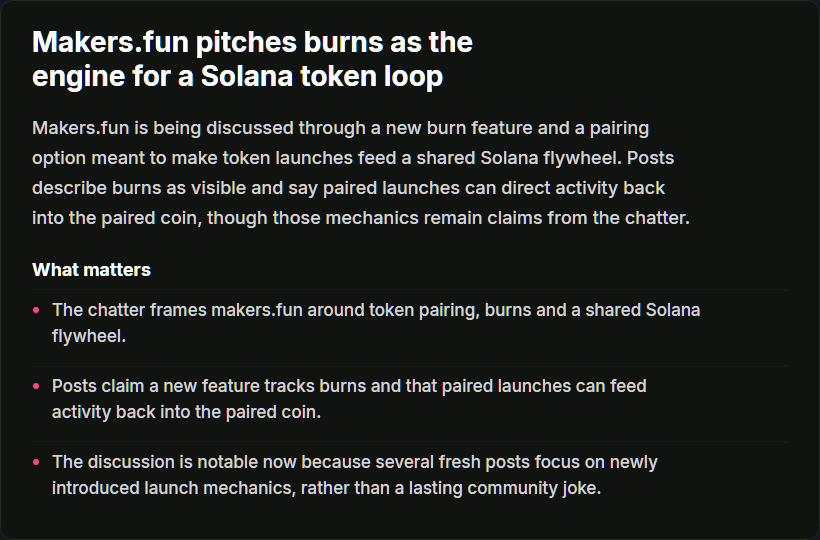
The write-up describes the story and can change when it is republished. The market strip, chart and audit panels show the available market information alongside it. Read What matters as additional context; those points can also update. When recent chart data is unavailable, the chart can show Last historical candle with the age of the newest available candle. Use this notice to assess how recent the chart data is.The audit panels

- Holders: top-10 share, snipers, insiders, bundlers, fresh-wallet swaps
- Safety: scam flag, DEX paid, liquidity in dollars and as a percentage, suspicious wallets
- Smart money: how many top traders are still in, what they hold and its share of the cap, realized, net flow
- Creator: tokens launched, how many graduated, funding, what the creator sold here and still holds
Themes on a card
Cards in the river, the story list on the left, can show up to three themes. They describe the story topic rather than a token condition. Review the audit panels for token information.Check it yourself
1
Open any story
Read the write-up, What matters and the story themes. Note what the story claims.
2
Drop to the audit panels
Same screen, no clicks. Does the holder spread, the liquidity, and the creator’s history
support the story, or undercut it?
3
Compare the context
Check the story age in the list, then read the market data and any historical-candle
notice on the chart. The market strip does not carry a separate publication timestamp.