

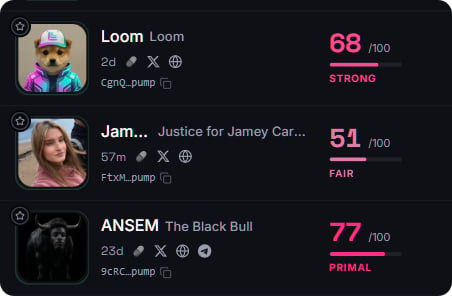
Reading the score
PrimalScore is a summary indicator displayed alongside each Alpha entry. Read it together with the entry time, market data and token information. It is not a probability of profit or a token-safety guarantee.The grades
PrimalScore labels are PRIMAL, STRONG, FAIR, or WEAK. Older score values can use PRIME, STRONG, ACTIVE, EARLY, or WATCH. Use the displayed label when comparing entries. A grade does not replace your own review of the token or its market.Score and entry details
The score is recorded when the call first fires and is not recalculated. A few older entries without a recorded score can show a recalculated value. Prime shows it beside the recorded entry references and current market data.PrimalScore does not predict profit. A higher-scored token can lose value, and a lower-scored
token can rise. Your decisions and their risks remain yours.