Every signal card carries the full case for the token. This page walks it top to bottom.
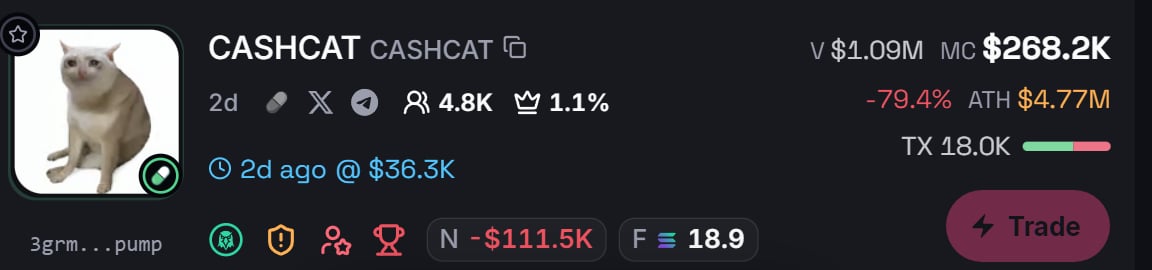
A signal card: volume, market cap, ATH, transactions, first alert, and the chip row

The header numbers

Most numbers expand on hover. TX, for example, opens the exact buy and sell split:
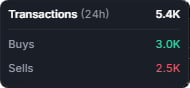
Hovering TX on a live card: 5.4K transactions split into 3.0K buys and 2.5K sells

First alert

The blue line (“2d ago @ $9.2K” on the card above) is the receipt: when the signal fired and the market cap it fired at. It is frozen at signal time and never repainted, so what a call is judged by later is exactly what you saw. The live multiple next to it is measured from that entry.

The chip row

Each chip is a check the token passed or failed. Hover any chip (tap on mobile) and it opens its full panel. The captures below are live hovers, straight from the feed.

Safety

The shield runs the structural checks: mint and freeze authority, liquidity state, and the rug checklist, summarized as a score out of 100. Green means the obvious rug levers are not there. It is a floor, not a promise.
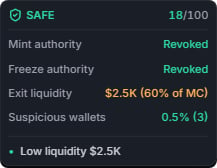
The Safety panel on hover: authorities revoked, exit liquidity with its share of market cap, suspicious wallets, and the reason line for the low score
The panel says why, not just what: this early token scores 18 because its exit liquidity is thin, even with both authorities revoked. Read the reason line before the number.

Holders

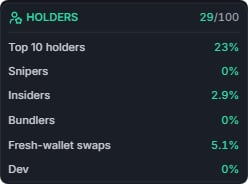
The cohort chip breaks down who actually holds the token: top 10 holders (the LP pool can be included there, so it counts less), snipers, insiders, bundlers, fresh wallets, and the dev. Concentrated or insider-heavy books fail quietly here long before they fail loudly on the chart.
The Holders panel on hover: every cohort with its percentage and the LP-pool footnote

Top traders

Of the wallets that traded this token best, how many still hold? Winners exiting while the chart still looks fine is one of the earliest honest warnings you can get.
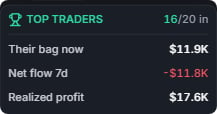
The Top Traders panel on hover: 16 of 20 still in, their combined bag now, 7d net flow, and realized profit
The panel adds the money behind the count: what the top twenty hold right now, which way their week flowed, and what they already banked.

Dex paid

Whether the team paid for its DEX listing profile, and whether it is running paid boosts. Paying is a small commitment signal; it separates tokens with an operator behind them from pure spray-and-pray deploys.

F: all-time fees

Total fees ever paid transacting the token, in SOL. This is the anti-wash number. Real activity burns real fees, so a token printing large volume on top of tiny lifetime fees is manufactured activity. Volume is cheap to fake. Fees are not.

NET: net buy flow

Buys minus sells over 24h, in SOL. Direction of the real flow: positive means money is entering the token, negative means volume is distribution dressed up as action.

Quick buy

The pink pill fills at your per-lane amount with your active preset. One tap, wallet signature, submitted.
No single chip is the verdict. The card reads in one glance, as a whole: real participation, clean structure, honest flow. When all of it agrees, that is a signal.