Free and Premium
Premium access belongs to your signed-in Primal account. Choose a term on the
Premium page, then select the connected wallet you want to use
for the payment. Connecting a wallet is separate from signing into your account.
What makes it different
Every trading terminal ships fast fills, a new-coin firehose, and a wall of settings. Those are table stakes. Speed is a commodity. A signals terminal is built on a different claim: what deserves your attention can be measured, and the measurement should be public.
Anyone can call tokens. The question that matters is what happened to the calls, and most feeds
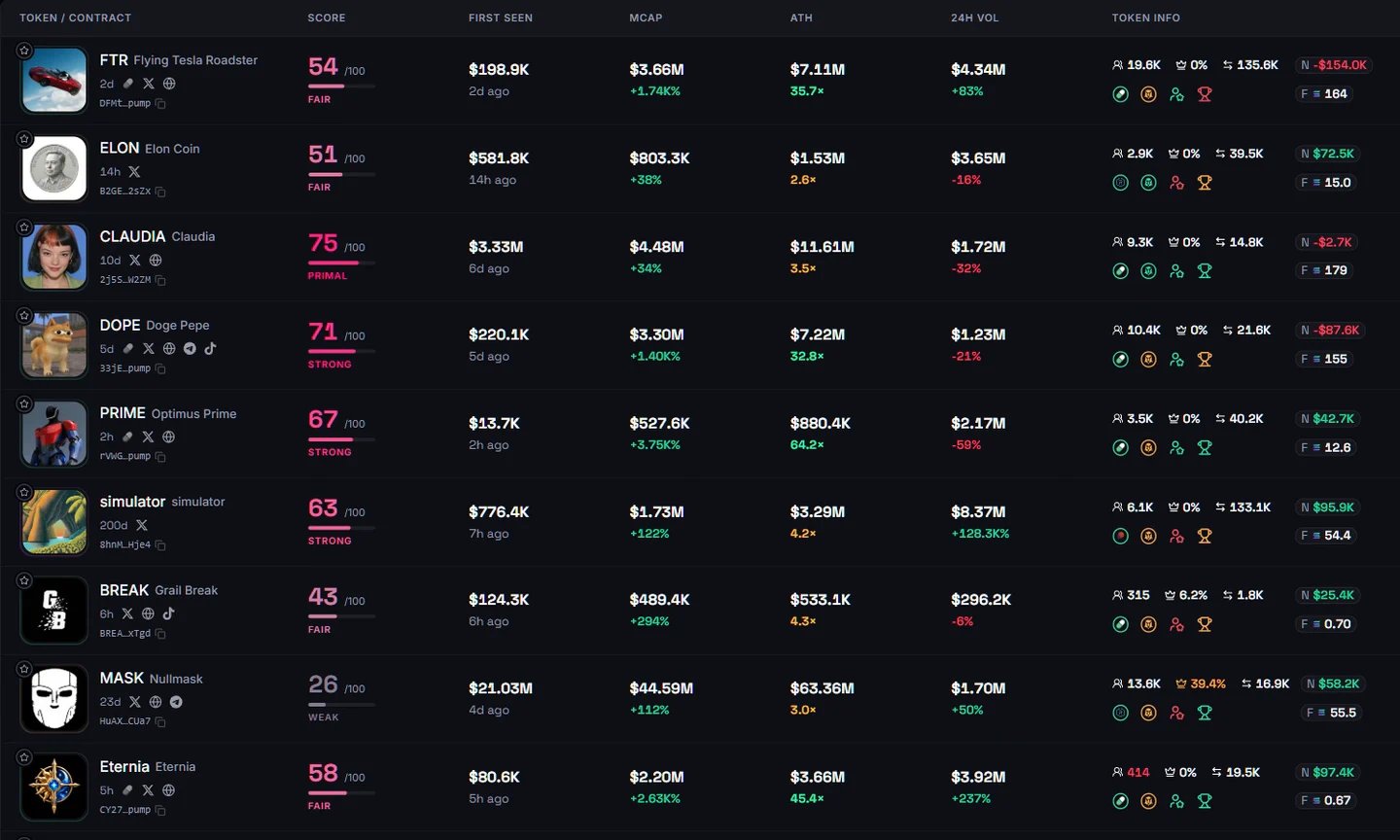
are structured so you can never check. Prime gives Premium members recorded entry references
beside later market data. The board shows its available history, including entries that lost
value; it is not an unlimited archive. Scores are recorded when a call first fires and are not
recalculated; a few older entries without a recorded score can show a recalculated value.
Your preferred Trade platform
In Premium setup, choose your preferred platform from the available options. Trade buttons on supported token cards open that provider’s chart for the full Solana contract address in a new tab. Trading and wallet approval happen with the provider, under its own terms and fees. You can also choose separate browser notification sounds for Discovery, Heating, Conviction, Prime, and Wire. Sounds start Off, and your saved platform and sound choices belong to your account.Live, not refreshed
Watch any card: the market cap ticks in place, the buy and sell bar fills as trades land, and Trending re-ranks under your cursor. Nothing waits for a refresh. The terminal stays smooth with hundreds of numbers moving at once, and the latency readout in the footer is a measured round-trip to the network edge, not a green dot that is always green.