

The problem with trenches
Every terminal has a “trenches” feed: the raw firehose of newly created coins. It creates zero value, and the reason is simple. A deployed coin is not a market. Thousands of tokens are created every day, and the overwhelming majority never see a real participant. Much of the volume that does print is washed: manufactured activity designed to look like demand on exactly the feeds that rank by volume. Watching the firehose is not an edge. It is noise with a user interface.What Radar does instead
Radar is that lane reinvented as a curated pipeline. primal. analyzes market metrics and participants in real time, and only what holds up surfaces as a signal:- Participation is real. Actual market participants acting, not a deploy transaction and a bot loop.
- Volume is true. Activity is weighed by what it costs and how it is structured, so washed volume does not buy a spot on the feed.
- Structure is clean enough to touch. Holder concentration, sniper and insider cohorts, dev behavior, liquidity state, and security checks are read before a token earns the screen.
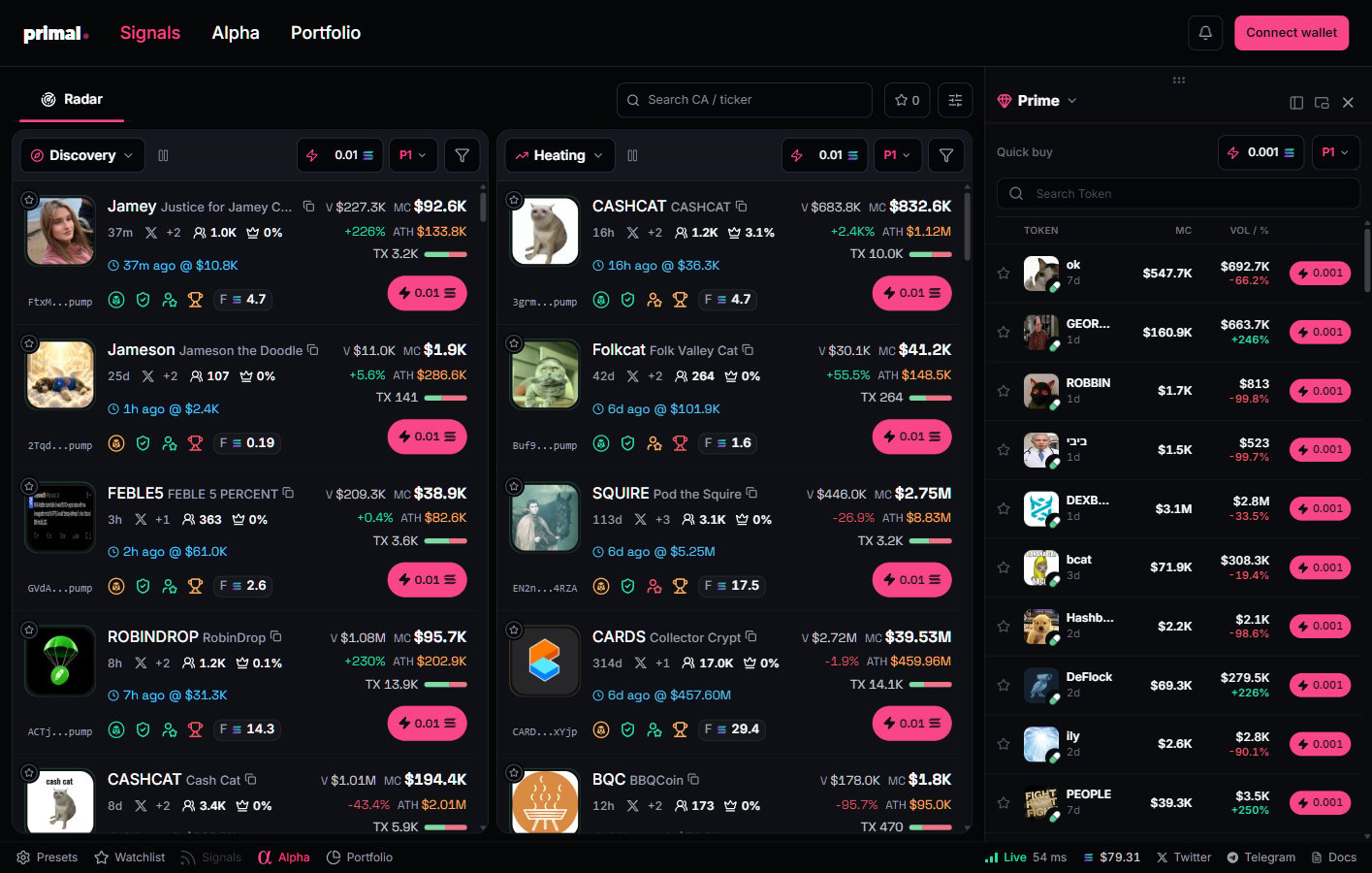
The three lanes
| Lane | Meaning |
|---|---|
| Discovery | First evidence. Early, highest risk, highest optionality |
| Heating | Escalating. Activity accelerating, more confirmation arriving |
| Conviction | Validated. The strongest and most complete evidence |
Reading a signal
Every number and chip on a card, and why each one is hard to fake.